Autonomous anti-drone defense.
Defense must always be cheaper than attack.
TDS-S detects, classifies, decides and engages weaponised UAS at a fraction of the cost of legacy interceptors. One operator. One crate. Five minutes to live.
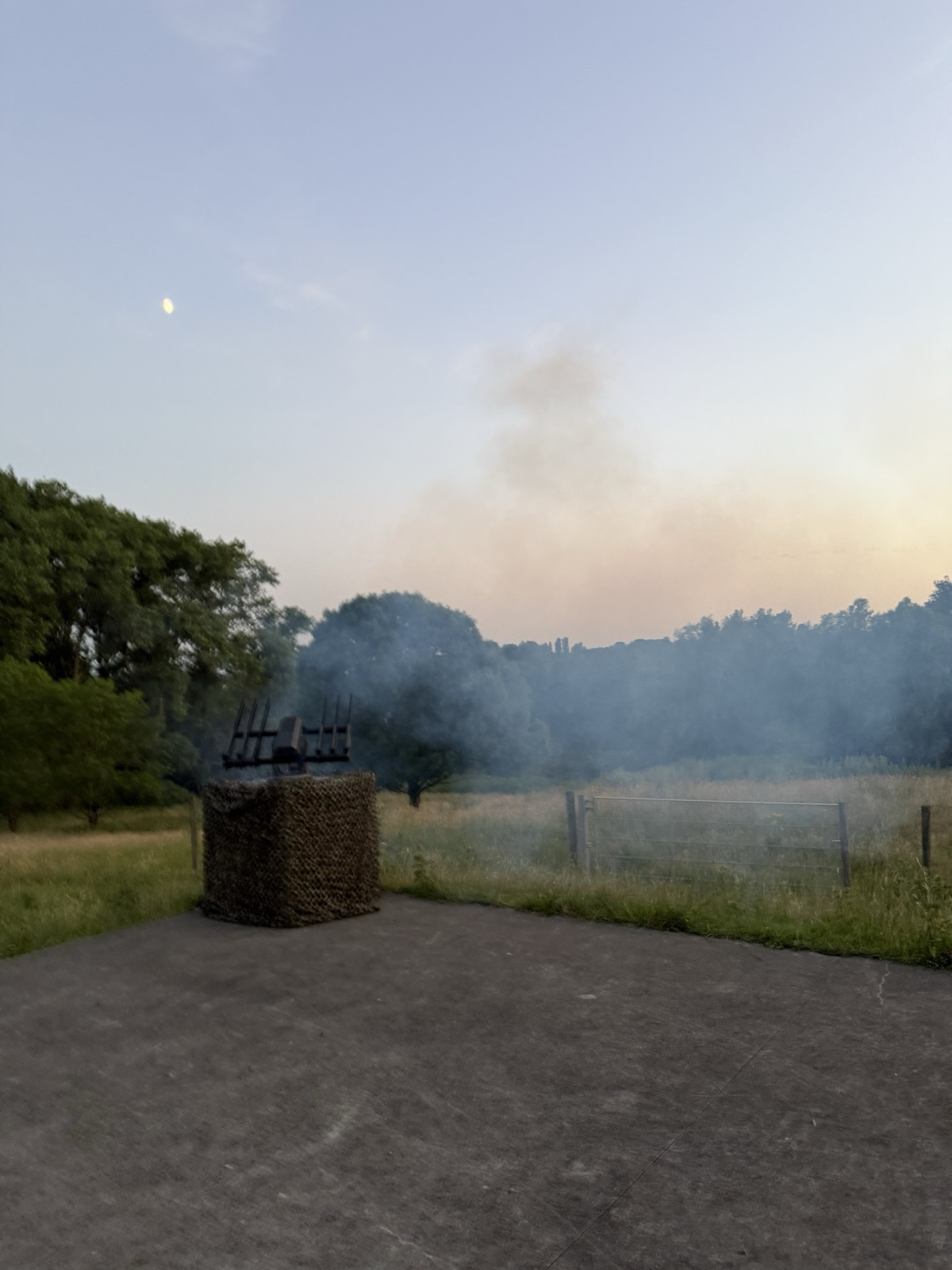
A €1,000 drone threatens infrastructure worth hundreds of millions. Conventional defenses cost orders of magnitude more.
Engineered to a price, built to a standard.
TDS-S closes the cost gap with the attacker while delivering the detection, classification and engagement of a full counter-UAS system in a single crate.
Favourable unit economics
Defeats the threat at a fraction of the attacker's cost, reversing the asymmetry that legacy interceptors create.
Protective radius
Each unit covers a 500 m radius. Network multiple units for continuous area coverage at scale.
Rapid deployment
A single operator brings the system live from a single crate. No prepared site, no specialist crew.
Continuous EO scan
360° electro-optical coverage, day and night, watching the full perimeter without interruption.
Night IR fusion
Infrared fusion extends detection to the full 500 m envelope after dark, with no loss of coverage.
Edge-inference AI
Classification runs on-device. No cloud dependency, no link to sever, no latency to the decision.
Operator-in-the-loop control
An operator authorises by default, with an optional fully autonomous mode for 24/7 scan and engage.
Kinetic interceptor
A kinetic effector defeats EMS and jamming-resistant threats, FPV drones and autonomous swarms alike.
Networked coverage
Scale protection by linking units into a single cooperative envelope across a site or perimeter.
System specification.
TDS-S, the Trajectory Defense System · Single. One crate, one operator, one continuous defensive envelope.
| Cost posture | 10× cheaper than the attacker, reversing the legacy cost ratio of up to 100×. |
| Protection radius | 500 m per unit, scalable by networking multiple units. |
| Deployment | 5 minutes in the field. Single operator, single crate. |
| Detection | Continuous 360° electro-optical scan, day and night. |
| Night coverage | IR fusion extends detection to the full 500 m envelope. |
| Classification | Edge-inference AI, on-device, with no cloud dependency. |
| Control mode | Operator-in-the-loop by default, with optional fully autonomous 24/7 scan and engage. |
| Effector | Kinetic interceptor, effective against EMS and jamming-resistant threats, FPV and autonomous swarms. |
Detect. Classify. Decide. Engage.
A single, continuous engagement sequence runs on every TDS-S unit, from first contact to the defeated threat.
Detect
360° EO scan, day and night. IR fusion extends coverage to the full 500 m envelope.
Classify
Edge-inference AI separates UAS from birds, aircraft and other traffic.
Decide
Operator-in-the-loop by default, with a fully autonomous mode for 24/7 unattended operation.
Engage
The kinetic interceptor defeats the UAS, including jamming-resistant and swarm threats.
High-value, civilian-adjacent sites.
TDS-S is built for the places where the cost of a single drone strike runs to lives and to hundreds of millions in assets.
Field hospitals
Protect mobile surgical units and casualty evacuation.
Power plants
Shield reactors, substations, gas terminals.
Airports
Cover runways, taxiways and perimeter.
Ports
Defend quay, terminal and anchored fleet.
Procurement-ready.
The slots below are reserved for the client to populate with certifications, deployment record, and partner accreditation.
Placeholder slots. To be supplied by the client.
Let's talk.
Ready to protect your site? Request a classified brief, and our team will respond within one business day.
Request a classified brief →